Back to Key Issues
Previous
More Details
Back to Key Issues
Previous
More Details
Pressure Transient Evaluations in Layered Formations
Considerations for Pressure Transient Testing
Contacts
| Ahmed Abou-Sayed | ahmed@advantekinternational.com | Advantek International |
Summary
Interpretation of pressure transient signatures in layered formations can be problematic. General guidelines are provided for carrying out meaningful tests.
Key Concepts
| LRTs | Method 1 | Method 2 |
Key Concept 1: LRTs
| LRTs: | What are some of the basic considerations for Layered Reservoir Tests (LRT)? |
| Reference: | I would like to follow up on this more. Are there some selected references? |
|
Back to Key Issues
|
Previous
|
More Details
|
Key Concept 2: Method 1 - after Kucuk et al., 1986
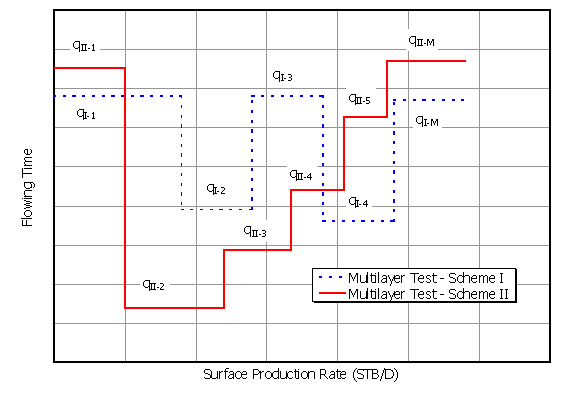
| Testing: | What is one of the preferred methods for carrying out a pressure transient measurement in a layered formation? This is known as a Multilayer Test (MLT). | ||
| Equipment: | What type of measurement program needs to be carried out? | ||
| Principles: | Why are the basic principles of the surveys suggested by Kucuk et al? | ||
| Procedures: | How do I run this test? | ||
|
|||
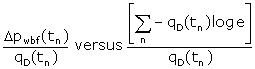
| Interpretation: | How is this acquired information interpreted? | ||
|
|||
|
Back to Key Issues
|
Previous
|
More Details
|
Key Concept 3: Method 2 - after Ehlig-Economides and Joseph, 1987
| Testing: | What is one of the preferred methods for carrying out a pressure transient measurement in a layered formation? | ||||||
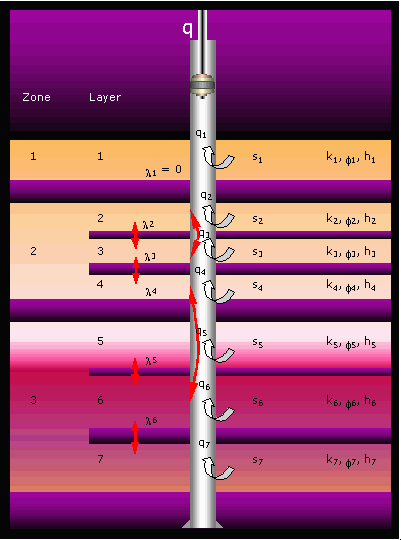
| Nomenclature: | Show me a schematic of the type of problem that can be solved with the technique suggested by Ehlig-Economides and Joseph? | ||||||
|
Notice the following:
|
|||||||
| Assumptions: | What are the assumptions made in the model? | ||||||
| Principles: | In simple terms, tell me how flow in each layer is calculated. | ||||||
|
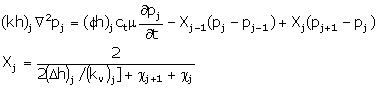
This shows a darcy-like relationship between the permeability and thickness of a layer (layer( "j"), the pressure gradient with radial position, the compressibility, viscosity, porosity and the change in pressure with time - similar to what you would find in the equation for radial flow into a well. It is modified by two terms "X" which account for any vertical movement of fluid into the zone above or the zone below. where: |
|||||||
| Procedures: | How is a test run and how is the data interpreted? | ||||||
|
|
|||||||
| Example 1: | Show me an example of what you might see when there is crossflow in the reservoir. | ||||||
|
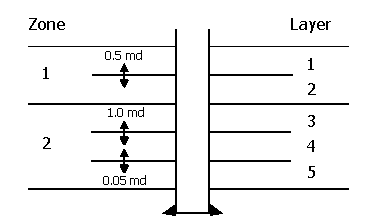
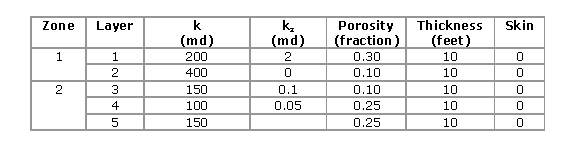
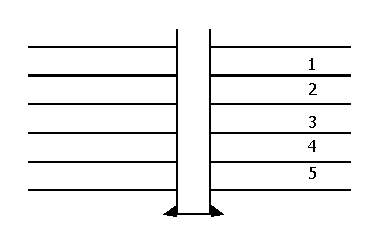
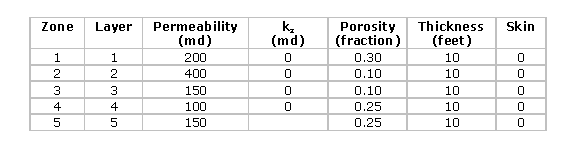
The properties of the layers and zones (Figure 3) are shown below.
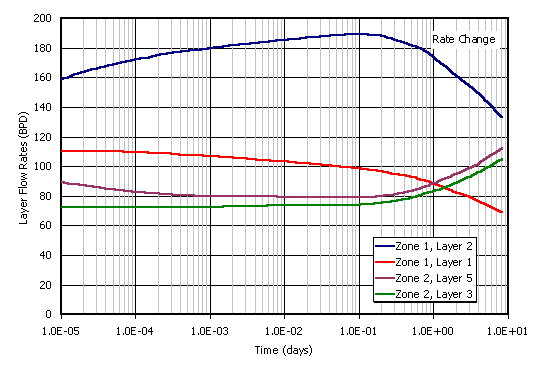
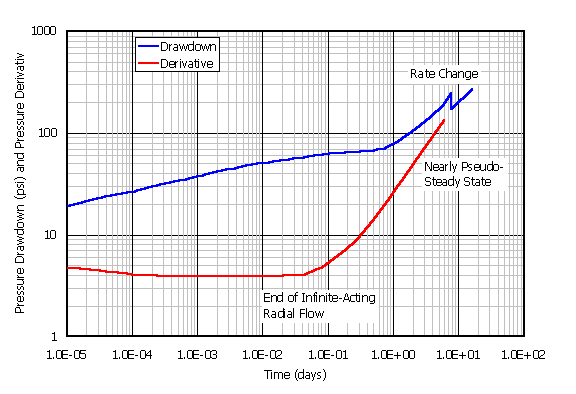
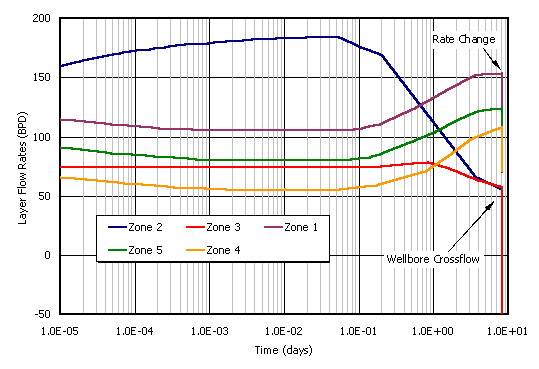
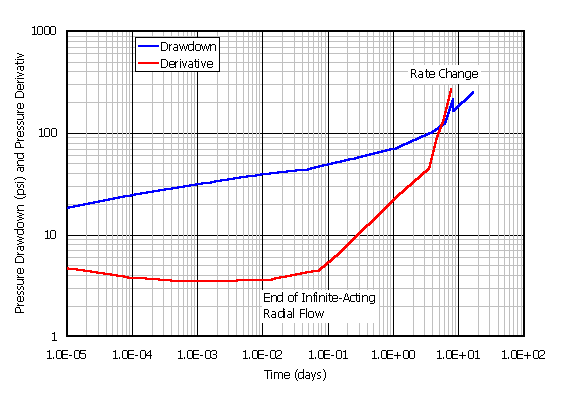
The rate and pressure behaviors are shown in Figures 4 and 5.
What do you see?
|
|||||||
| Example 2: | Show me an example of what you might see when there is NO crossflow in the reservoir. | ||||||
|
The properties of the layers and zones (Figure 6) are shown below. Notice that the vertical permeability (kz is zero.
The rate and pressure behaviors are shown in Figures 7 and 8.
What do you see?
|
|||||||
| Example 3: | Show me a simplified example of how calculations are done when analyzing this type of test data. | ||||||
|
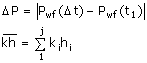
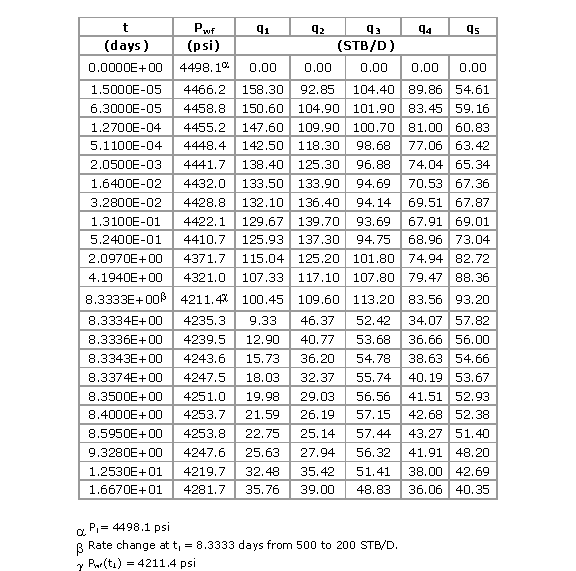
This is a five layer case. The pressure-rate history for the five zones is shown below. NOTE THAT THE CALCULATIONS THAT FOLLOW ARE VERY SIMPLIFIED - FOR DEMONSTRATION PURPOSES ONLY - YOU SHOULD READ THE REFERENCE AND CONSULT WITH YOUR PTA SPECIALIST.
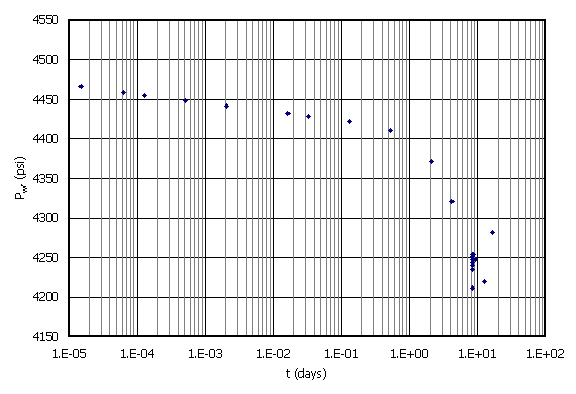
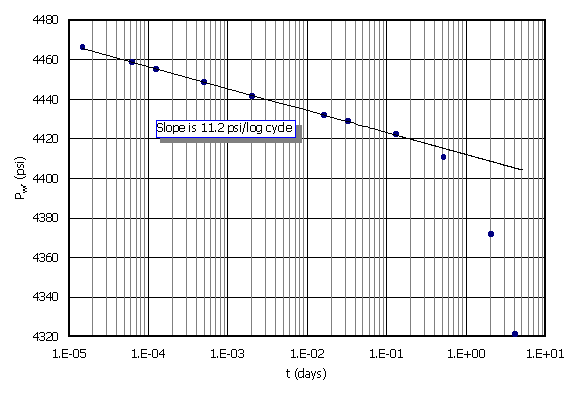
The variation in bottomhole pressure versus time (it is a flowing situation but the same concepts apply to injection) is shown in Figure 9 (Cartesian and semilog).
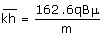
The semilog slope is 11.2 psi/log cycle and the early transient flow period is a straight line on a semilog plot. These are synthetic data and the basic reservoir properties are known in advance. The average kh is:
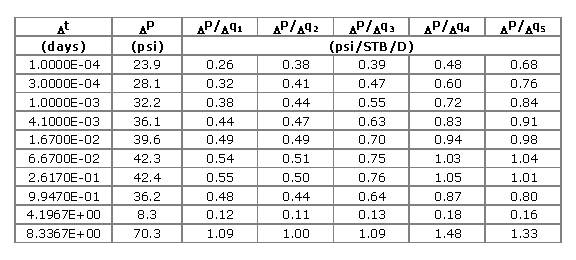
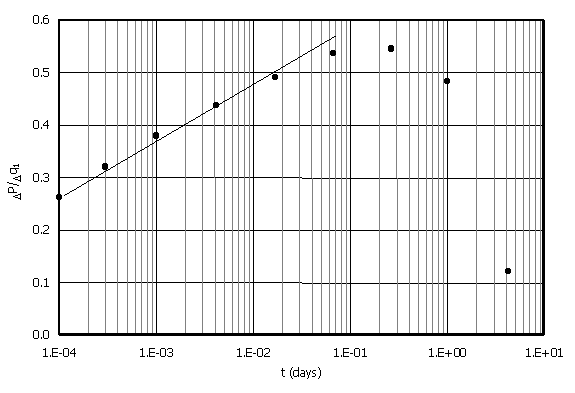
The actual value is 10,000 md-ft. You can then evaluate characteristics of individual layers. An approximation is shown below for illustrative purposes only (refer to the original paper for more detailed treatment and consideration of boundary conditions, as well as type curve generation and rate time convolution). The solution shown here involved plotting the pressure difference normalized by the rate difference against the time. The normalized data are shown below and Figure 10 is a plot of rate normalized pressure versus time for Layer 1.
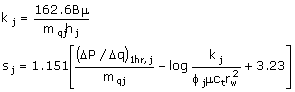
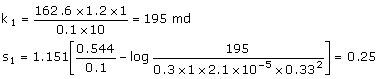
The slope mq1 is 0.1 psi/STB/D. The permeability and the skin are:
The actual values are k = 200 md and zero skin for this layer. |
|||||||
|
Back to Key Issues
|
Previous
|
More Details
|