Example - The Influence of Changing Reservoir Pressure
Example 1 - Background:
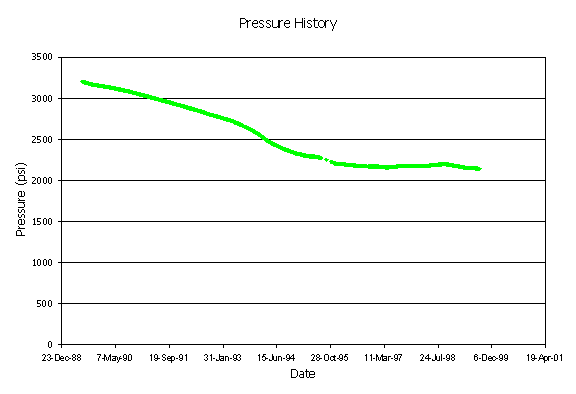
This is a chalk reservoir with a permeability of a few md. Measurements for reservoir pressure were taken and recorded periodically during the injection chronology. As can be seen from Figure 1, the reservoir pressure is in constant decline.
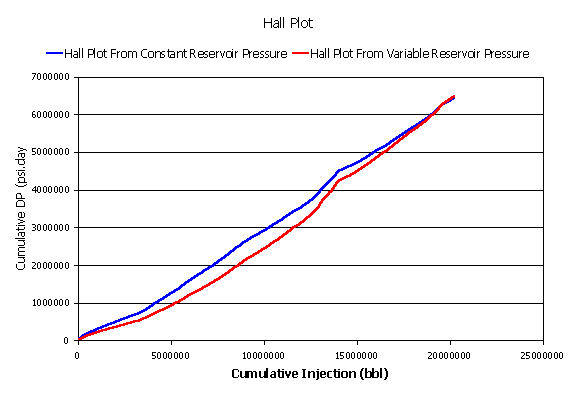
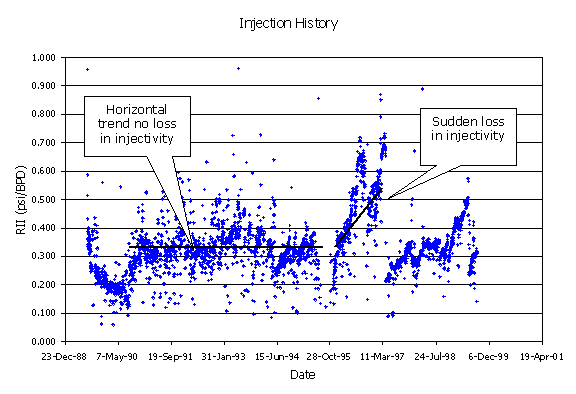
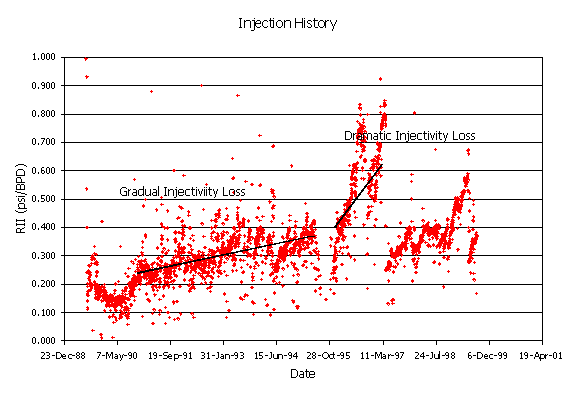
The Hall plot, using the constant reservoir pressure (Figure 2) does not provide as much indication of problems developing in the reservoir! This can also be seen in Figures 3 and 4. When the reservoir pressure is kept constant, the Reciprocal Injectivity Index stays constant before a dramatic period of reducing injectivity (Figure 3). Using the actual reservoir pressure, there is more indication of progressive damage, since the RII is seen to gradually increase before the dramatic injectivity reduction (rapid increase in RII), as is seen in Figure 4.
|
View Figure 1:
|
Variation of reservoir pressure with time.
|
|
|
|
View Figure 2:
|
Hall Plots.
|
|
|
|
View Figure 3:
|
RII from Constant Reservoir Pressure.
|
|
|
|
View Figure 4:
|
RII using the measured (and decreasing) reservoir pressure.
|
|
|
Example 2 - Background:
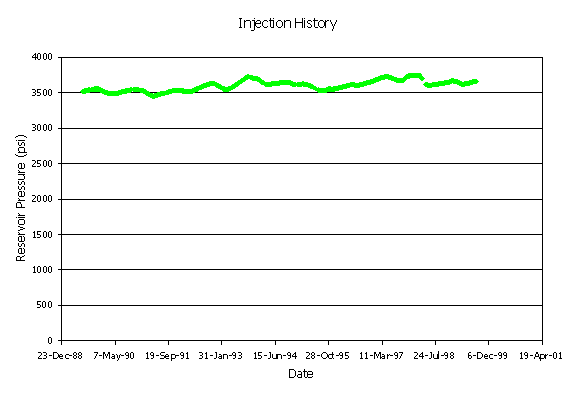
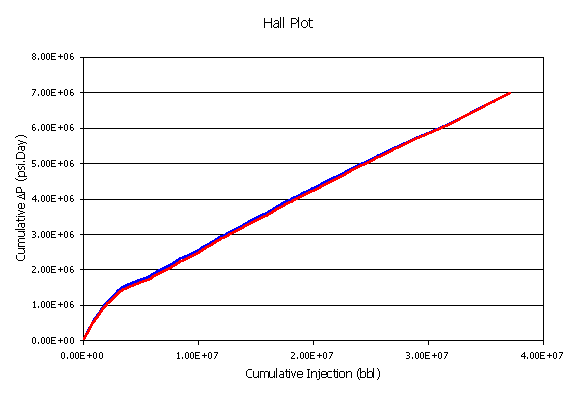
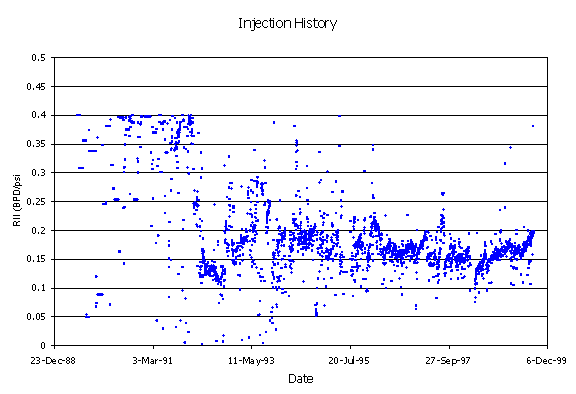
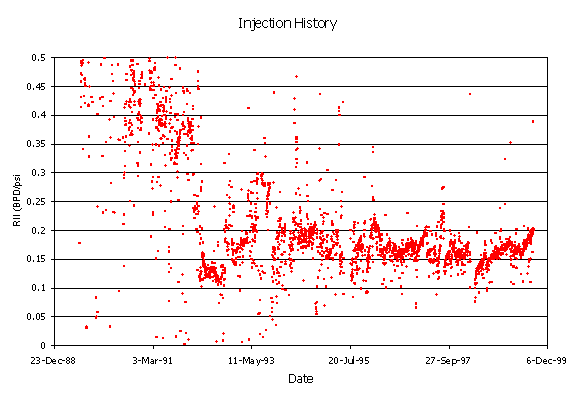
In this example, a relatively constant reservoir pressure was measured - as can be seen from Figure 5. Naturally, plots using either the actual (varying) reservoir pressure or a constant reservoir pressure are almost identical (see Figure 6 through Figure 8).
|
View Figure 5:
|
Variation of the average reservoir pressure with time.
|
|
|
|
View Figure 6:
|
Hall Plots showing both Constant Reservoir Pressure (Blue) and Varying Reservoir Pressure (Red).
|
|
|
|
View Figure 7:
|
RII determined using a constant reservoir pressure.
|
|
|
|
View Figure 8:
|
RII determined using the measured reservoir pressure.
|
|
|
Back
Main
Documents