
Data Analysis
Multi-Rate Testing Analysis
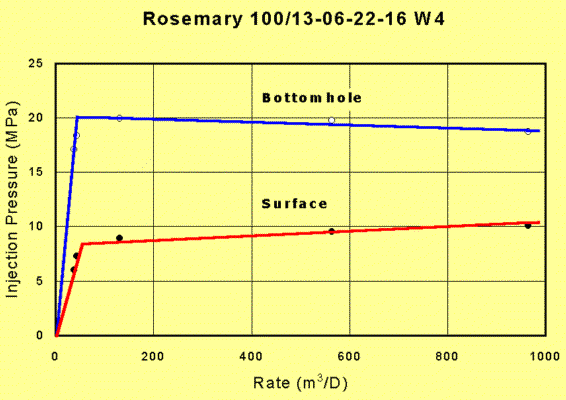
Figure 12. Plot of surface pressure versus rate for an actual step rate test. The bottomhole pressure was estimated, accounting for the hydrostatic head and frictional effects.
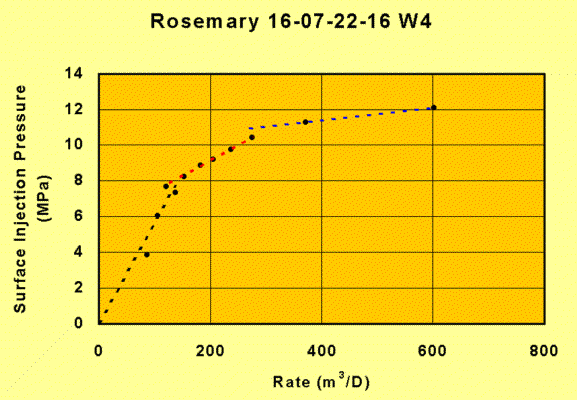
Figure 13. Plot of surface pressure versus rate for an actual step rate test, emphasizing the difficulties in picking inflection points, or multiple mechanisms occurring (such as reopening a pre-existing fracture, more than one fracture opening, etc.).
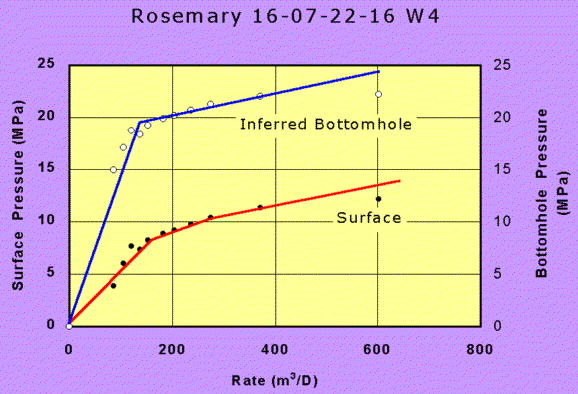
Figure 14. Plot of inferred bottomhole pressure versus rate for an actual step rate test. Some of the difficulties in picking an inflection point may be overcome by these methods. The difficulty (as evident from the one outlier) is the assumptions used for calculating frictional pressure drops.
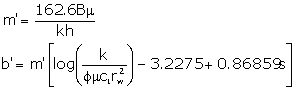
The premise is that multiple-rate transient data should appear as a straight line when plotted as:

These plots will not be done properly unless the analyst understands the meaning of the variables. The rate corresponding to each plotted pressure point is qn. This is the last rate when that pressure point was measured. As time increases, the number of rates may increase and the last rate may change; but each pressure point is identified with the rate occurring when that pressure was measured. There may be several pressure points associated with a given rate. This technique can help clarify inflection points. Furthermore, skin and permeability can be estimated. To understand the importance of using this technique, it can be envisioned that it accounts for changes in pressure conditions due to the injection that has preceded any particular stage.
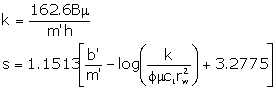
The units in all of the equations used for these analyses are:
k is absolute permeability (md),
B is the formation volume factor (RB/STB),
m is the viscosity (cP),
m' is the slope of a multi-rate plot (psi/STBPD/cycle),
h is the formation thickness (feet),
b' is the intercept on a multi-rate plot (psi/STBD),
f is the porosity (fractional),
ct is the total system compressibility (psi-1), and,
rw is the wellbore radius (feet).
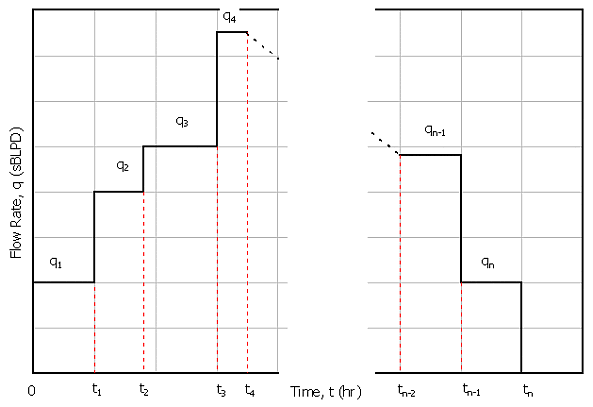
Figure 15. A schematic representation of a step-rate test. The nomenclature indicates the parameters to be used in multi-rate test analyses.
| <Pitfallls | Examples> |
 Back to Key Issues Back to Key Issues
|
Top
|
Previous
|
Monitoring Best Practices
|